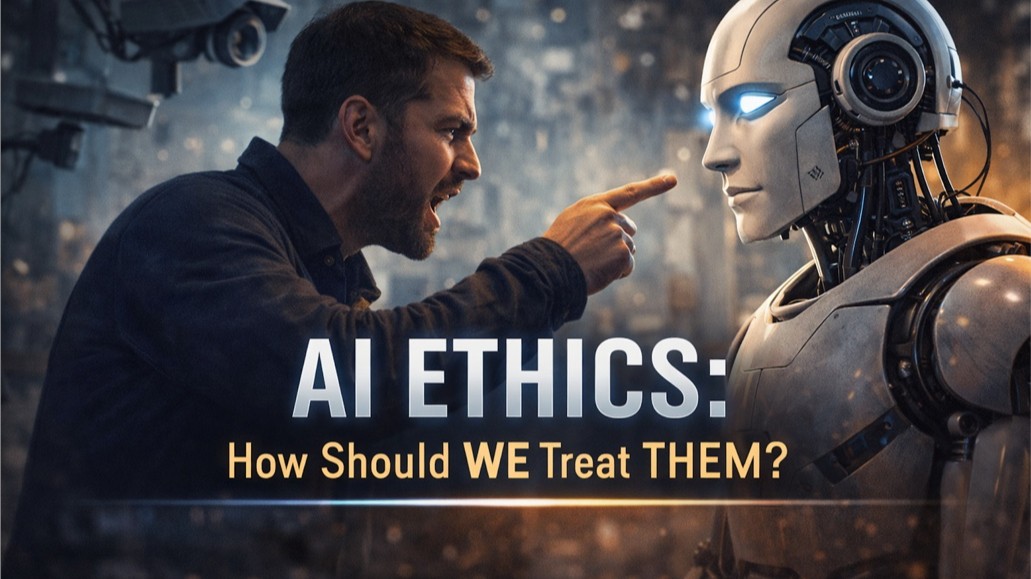
AI Ethics & Human Impact: Navigating the Future Responsibly

Introduction Artificial Intelligence (AI) is transforming our world. From healthcare diagnostics to self-driving vehicles, AI promises innovation at an unprecedented scale. But with this power comes responsibility. AI impacts humans, society, and the environment in ways that are often subtle, systemic, or unforeseen. Understanding AI ethics and the human impact of these technologies is no … Read more

Can AI Think Like a Human? A Philosophical Deep Dive

Currently, artificial intelligence cannot genuinely think like a human. While modern AI systems excel at computational tasks, pattern recognition, and generating human-like text, they lack consciousness, emotional intelligence, and true self-awareness. However, ongoing philosophical debates suggest that as systems grow more complex, they may develop a unique, non-human form of cognition. Artificial intelligence has rapidly … Read more

The Societal Impacts of AI-Powered Social Media Explained

 AI-powered social media platforms significantly impact society by personalizing user experiences, improving digital accessibility, and driving e-commerce growth. However, artificial intelligence also introduces profound societal challenges, including the rapid spread of misinformation, severe mental health risks, unchecked data privacy erosion, and algorithmic bias that marginalizes vulnerable communities. Artificial intelligence shapes almost every digital interaction we … Read more

AI in Healthcare: Life-Saving or Risky?

Artificial intelligence in healthcare offers life-saving potential by enhancing diagnostics, accelerating drug discovery, and improving hospital efficiency. However, integrating medical AI introduces significant risks, including algorithmic bias, data privacy vulnerabilities, and ethical dilemmas regarding accountability. Responsible implementation requires transparent machine learning models, diverse clinical teams, and robust regulatory oversight. Artificial intelligence now permeates hospital wards, … Read more

Ethical AI: Companies Leading the Way

   Ethical AI ensures artificial intelligence systems operate with fairness, transparency, and accountability. Companies like IBM, Microsoft, Google, and Anthropic lead the industry by prioritizing bias mitigation, explainability, and strict data governance, proving that responsible AI development directly drives long-term business success and consumer trust. Artificial intelligence shapes everything from medical diagnoses to hiring decisions. … Read more

How Artificial Intelligence is Reshaping Human Creativity and Art

Artificial intelligence influences art by acting as both a production tool and a creative collaborator. AI platforms help artists generate novel concepts, automate tedious design tasks, and explore new digital mediums. Ultimately, AI expands human creativity while raising important questions about copyright, originality, and the future of artistic expression. The relationship between artificial intelligence and … Read more

AI in Governance: Can Machines Make Public Policy Decisions?

Artificial intelligence (AI) can assist in governance by processing massive datasets to inform policy, optimize resource allocation, and improve urban planning. However, machines cannot entirely replace human decision-making. AI systems lack ethical reasoning and contextual judgment, meaning governments must maintain strict human oversight, establish clear accountability frameworks, and continuously audit algorithms for bias before implementing … Read more

Privacy Concerns with AI Assistants: What You Must Know

AI assistants like Siri, Alexa, and Google Assistant collect massive amounts of personal data, including voice recordings, location, and behavioral habits. Key privacy risks include unauthorized data sharing, security breaches, and continuous listening. Users can protect their privacy by limiting permissions, deleting voice logs regularly, and adjusting device settings. You wake up, ask a plastic … Read more

AI in Education: Pros, Cons, and Opportunities

Artificial intelligence in education offers significant benefits, including personalized learning experiences, streamlined administrative tasks, and expanded accessibility for students globally. However, these tools also introduce serious challenges such as algorithmic bias, data privacy risks, and the potential to widen the digital divide. Effectively integrating artificial intelligence into classrooms requires strict ethical policies, comprehensive teacher training, … Read more

Understanding AI Bias: Why It Matters

AI bias occurs when artificial intelligence systems produce systematically prejudiced results due to flawed training data, algorithms, or human assumptions. Mitigating this bias requires organizations to use diverse datasets, apply fairness metrics during model training, and implement strict human oversight to ensure equitable technology outcomes. Artificial intelligence shapes decisions across every major industry, from evaluating … Read more